Bali Founder and Business Events: A Date-Checked 2026 Guide
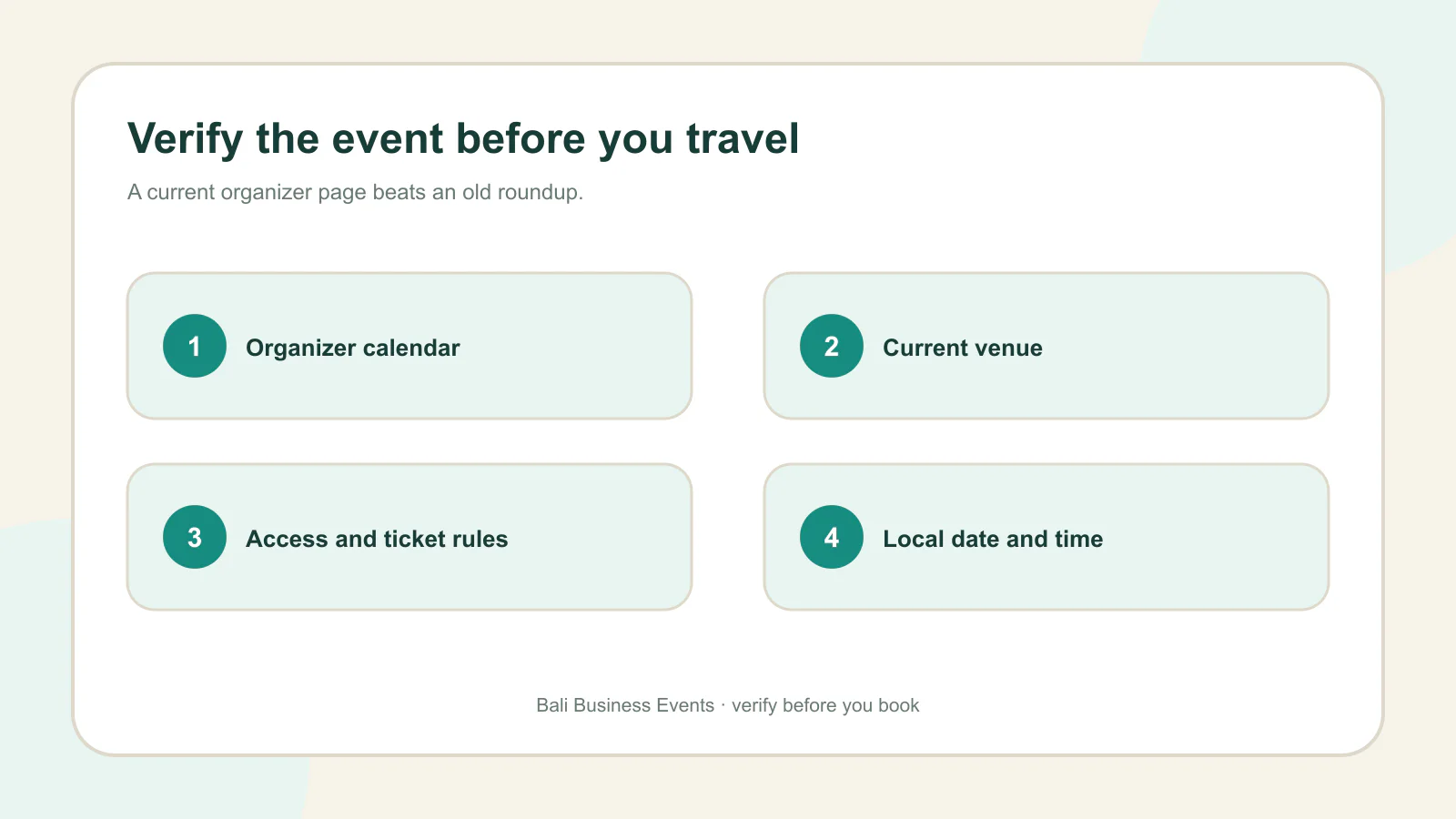
Image: Bali Business Events
Bali has active founder, technology and coworking communities, but a useful 2026 guide cannot be a static list of “weekly” events copied from an old blog. Schedules move, venues change and some once-famous spaces have closed.
This guide starts with organizer-controlled pages that were active on the evidence-check date. Open the linked calendar before travelling or paying.
Evidence check: 27 July 2026.
Three calendars worth checking
Bali Start-ups and Tech Community
The Bali Start-ups and Tech Community on Meetup listed several upcoming Canggu events when checked, including networking dinners and its “How I AI” series. The group page is more useful than a copied schedule because it shows the current venue, RSVP rules and organizer updates.
Use it if you want founder and technology conversations. Do not assume every event is free, open to walk-ins or held at the same location.
Startup Grind Bali
Startup Grind Bali says its chapter works with BWork Bali and runs founder programming that includes fireside chats. Its page also separates upcoming and past events, which makes it easier to see whether a listing is current.
Use the chapter page to confirm whether the next event is in person or virtual. A global Startup Grind event shown on the page is not automatically a Bali event.
Coworking community calendars
Current coworking operators publish their own access and event information:
- BWork Bali lists Canggu and Uluwatu locations and links to business, networking and wellness events.
- Tropical Nomad publishes its Canggu address, membership information and community events.
- Outpost currently lists two Bali coworking locations in Ubud and describes member events.
Some sessions are members-only or require an RSVP. Treat each operator’s current page as the authority for access.
A stale listing to avoid
Dojo Bali still appears in many search results and old “best coworking” guides. The Dojo Bali site now states that the space is officially closed. Hubud merged with Dojo in 2019, so presenting either name as a current operating coworking option is misleading.
That is why this guide does not rank venues from reputation alone. Confirm that a space is operating, check its current address and contact it before building a trip around it.
Choose events by the job you need done
You want peers and repeated contact. Pick one recurring organizer and attend more than once. Familiarity can make follow-up easier, but attendance does not guarantee clients, investors or hires.
You want structured startup programming. Check Startup Grind Bali and the business-event sections of active coworking operators.
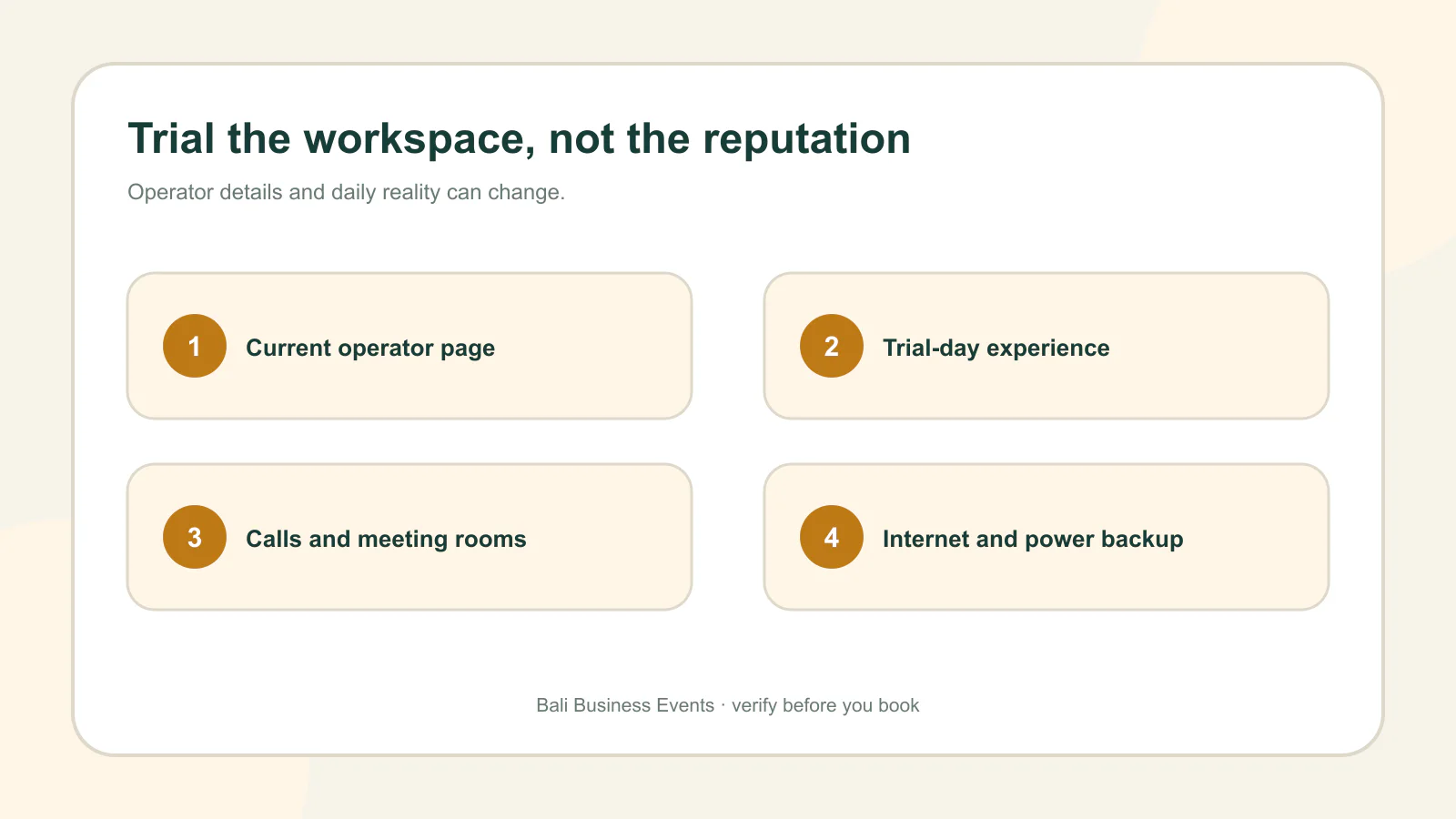
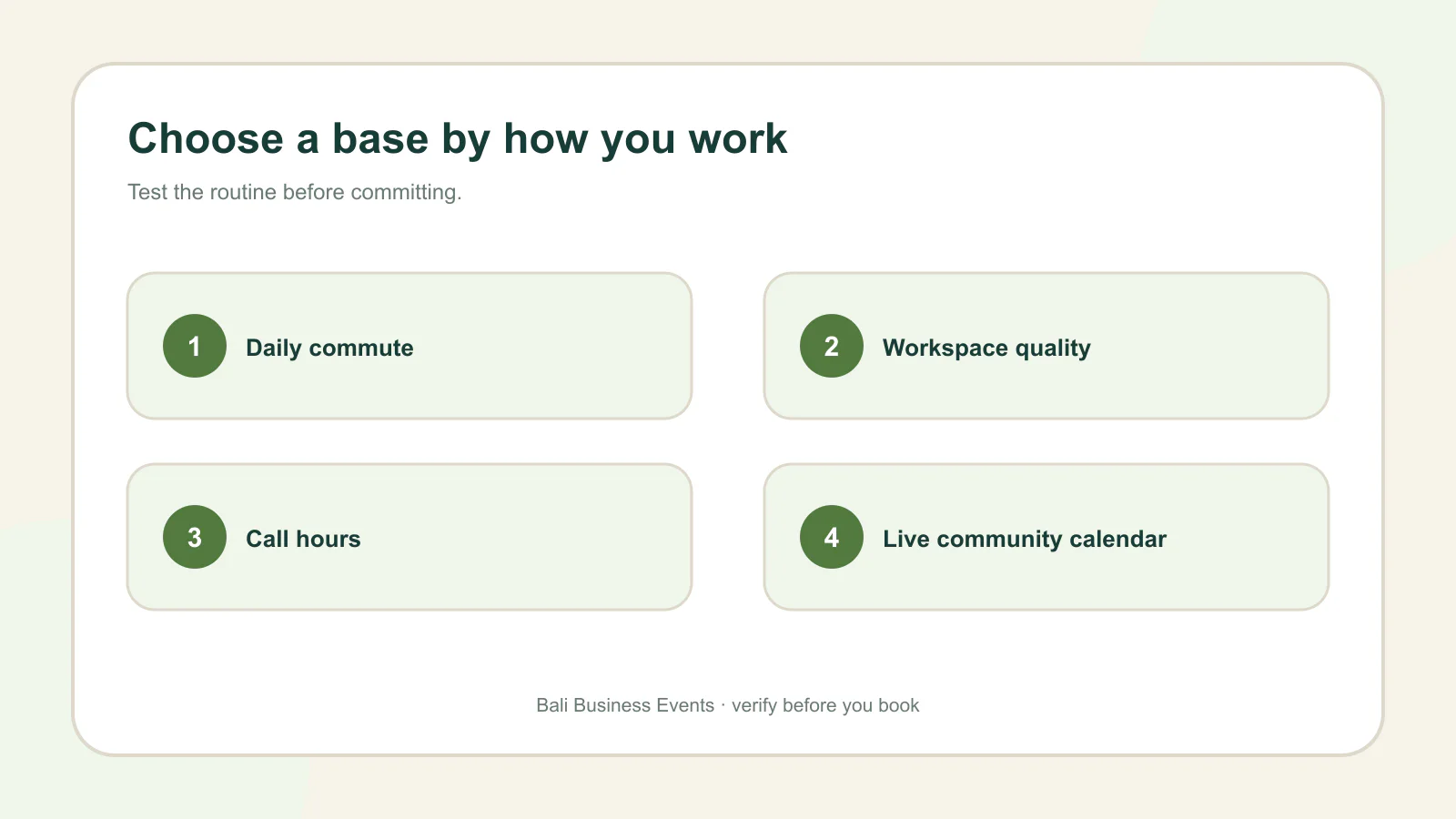
You want a workspace plus community access. Compare the operator’s current membership rules, event access, call spaces and opening hours. A day pass may not include the same events or community channels as a membership.
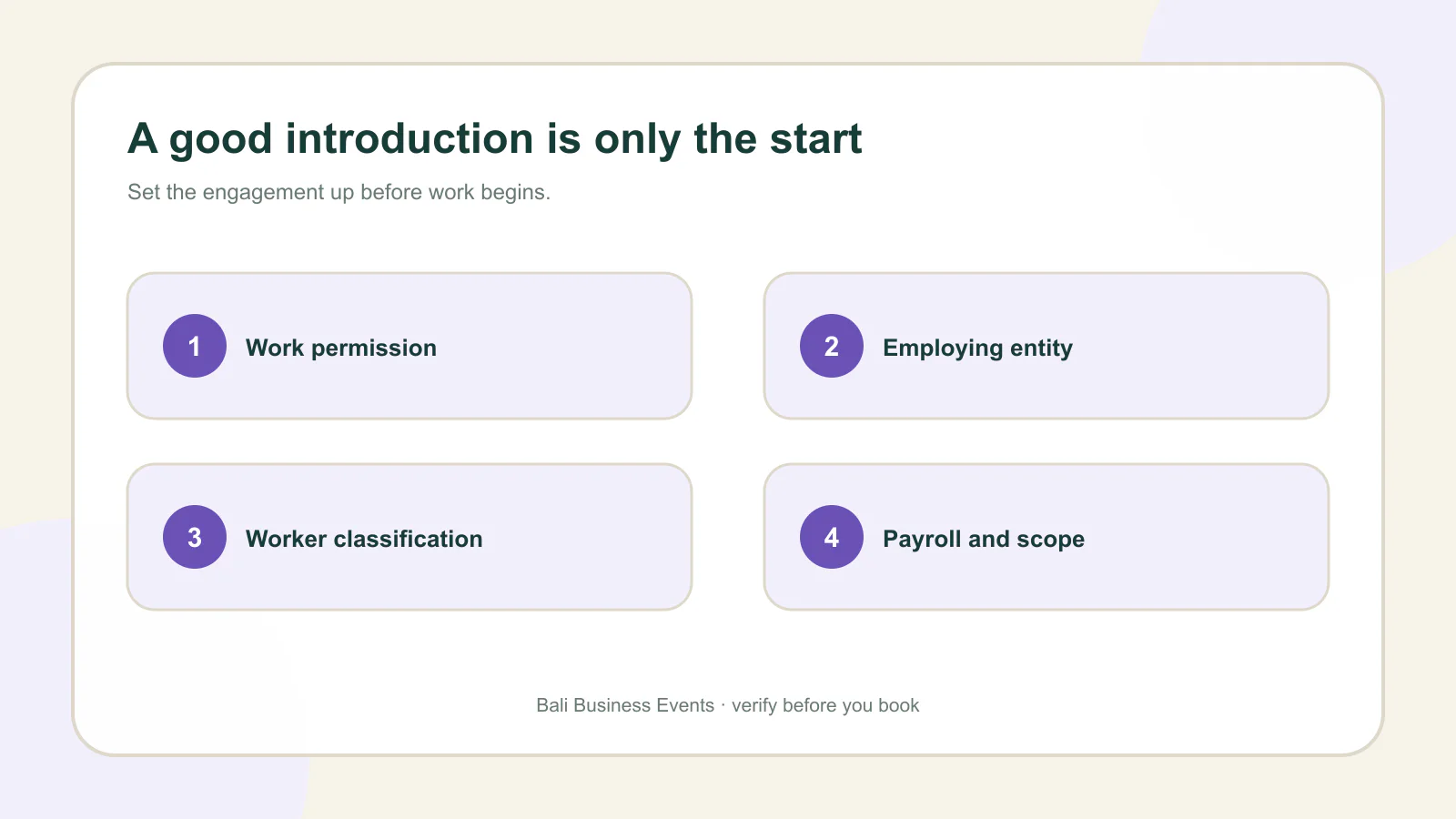
You want to recruit. Ask candidates how they are legally able to work, who will employ or contract them and where the work will be performed. A chance meeting in a coworking space is not a compliance process. If you want external recruiting support, you can request a scoped conversation with White Glove Recruitment. Availability, coverage and outcomes depend on the brief; this is not a promise of a shortlist or placement.
A practical first-week plan
- Open the organizer pages and save two confirmed events with dates, venues and RSVP instructions.
- Contact one coworking operator and ask what a day pass actually includes.
- Attend one event that matches your work rather than the largest-looking crowd.
- Follow up with people who explicitly invite contact.
- Recheck the calendar on the day of the event.
What this guide cannot tell you
It cannot verify a private WhatsApp group, predict who will attend, guarantee the quality of introductions or tell you which immigration permission fits your work. Indonesia’s official visa list is the starting point for visa categories; obtain qualified advice for your facts.
Primary and operator sources
- Bali Start-ups and Tech Community on Meetup
- Startup Grind Bali
- BWork Bali
- Tropical Nomad
- Outpost coworking locations
- Dojo Bali closure notice
balinetworkingfounderscoworkingeventsstartups